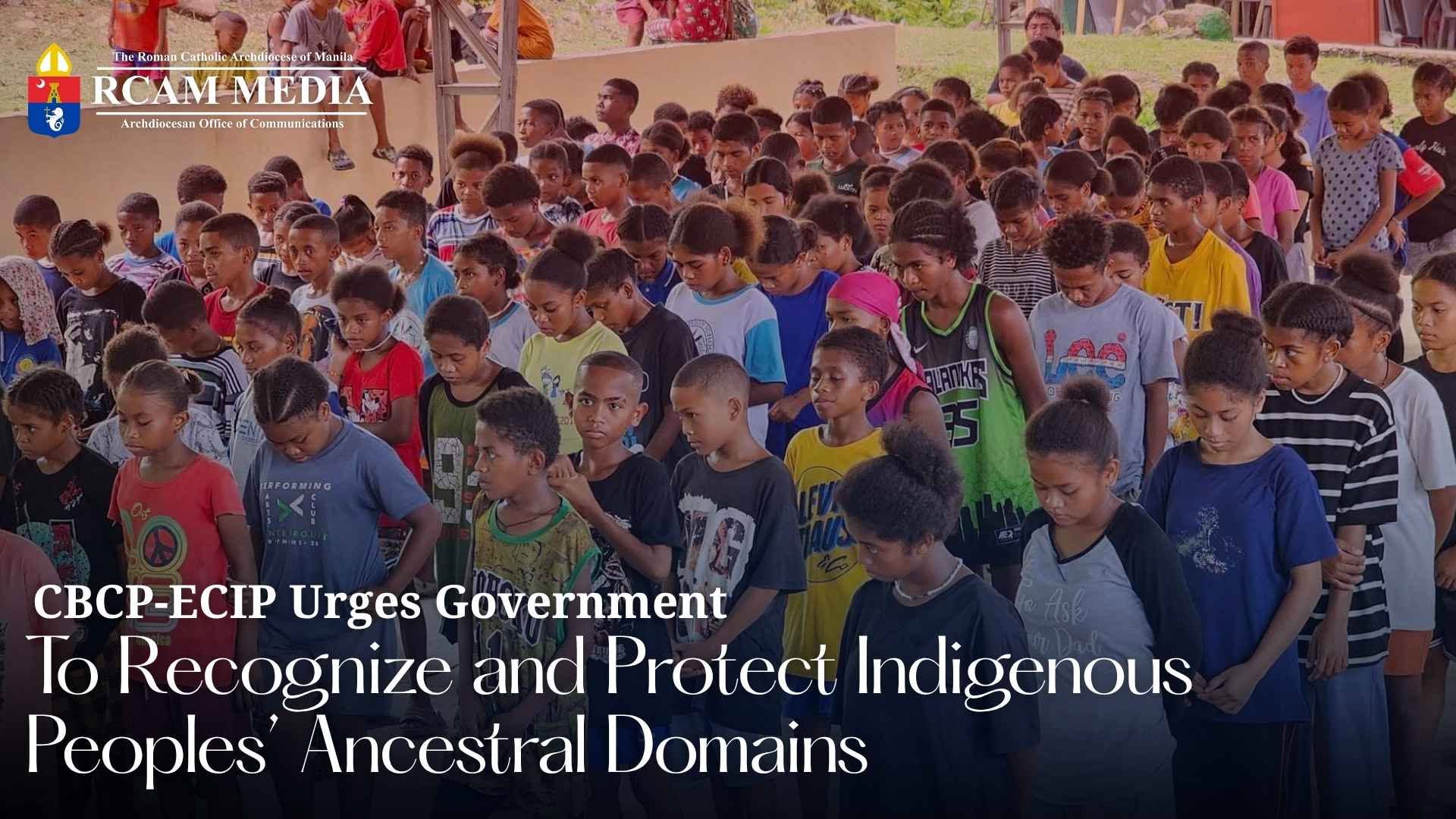

In observance of Indigenous People’s Sunday on October 11, the Catholic Bishops’ Conference of the Philippines – Episcopal Commission on Indigenous Peoples (CBCP-ECIP) renewed its call to the government to recognize and protect the rights of indigenous peoples to their ancestral lands.
This message aims to promote the dignity and identity of indigenous communities in the country. In a news post from the website of Radio Veritas, Tony Abuso, the Executive Secretary of CBCP-ECIP, said that it is essential to acknowledge indigenous communities, especially the ‘Bacao Ayta’ in Palayan City, Nueva Ecija.
The group consists of 120 families have lived in the area for over three decades after fleeing from Pampanga due to the eruption of Mount Pinatubo in 1991.
“Mahihirapan na pong makabalik ang mga Ayta sa Pampanga dahil ang kanilang komunidad ay nagbago na. Sa loob ng tatlumpung taon, umusbong na ang kanilang pamumuhay sa Palayan City, kaya’t ito ang malaking isyu ngayon sa Bacao,” Abuso told Radio Veritas.
The recognition of ancestral domain is a critical issue for indigenous peoples, especially for those without a Certificate of Ancestral Domain Title despite their claims. Abuso stressed that the government must acknowledge their rights based on the principle of native title, highlighting their connection to the land and culture.
“Hindi lamang pisikal na paglilipat ang epekto ng mga proyektong may kinalaman sa kanilang mga lupain. Ang pagkawala ng kanilang kultura at tradisyon ay isang seryosong isyu na dapat bigyang pansin, lalo na para sa mga susunod na henerasyon,” he added.
Abuso also pointed out the lack of clear programs for indigenous peoples, such as the absence of relocation plans for those forced to leave their homes due to disasters. Those situations faced by the indigenous peoples lead to further suffering and concern within these communities.
With the theme, ‘Journeying with Indigenous Peoples: Honoring God’s Creation and Rights of Nature,’ this year’s celebration of Indigenous People’s aims to recognize indigenous peoples as part of God’s creation, but also an invitation for all to value our fellow beings and the nature from which we all originate.
In his encyclical Laudato Si’, Pope Francis calls on everyone to protect our “common home,” emphasizing the vital connection between environmental care, human dignity, and the welfare of those most impacted by environmental destruction. His message encourages partnership with indigenous peoples in their fight for rights and in the stewardship of the planet.